Countertop cooking appliances have quietly reshaped the way a lot of households approach dinner. Between work schedules, family activities, and the general desire to spend less time hovering over a stove, it’s no surprise that combination appliances have become a fixture in many kitchens. The Cuisinart 3-in-1 Cook Central 6-Quart Multi-Cooker, model MSC-600 NAS, is one example of this category — a unit built around the idea that browning, steaming, and slow cooking don’t need to happen in three separate pieces of cookware.
This article walks through what the appliance offers, how people commonly put it to use, who tends to get the most value from it, and a few practical points worth thinking through before adding one to a kitchen. Nothing here is meant to read like a sales pitch — it’s simply an overview meant to help someone understand what this type of product actually does.
What This Appliance Is Designed to Do
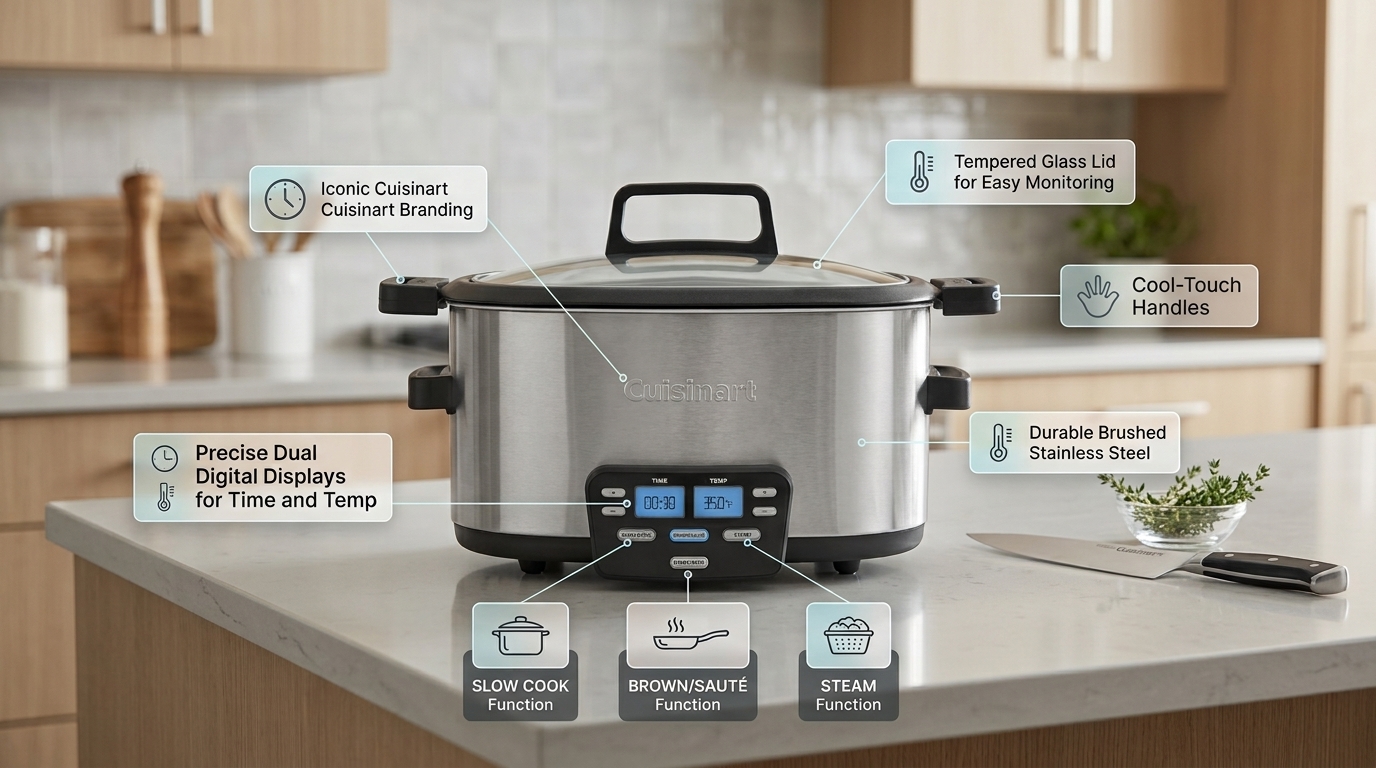
At its core, the MSC-600 is an electric multi-cooker with a 6-quart nonstick cooking pot housed inside a brushed stainless steel exterior. Rather than functioning as a single-purpose slow cooker, it combines three cooking modes into one unit: Slow Cook, Brown/Sauté, and Steam. The idea is straightforward — instead of browning meat in a skillet, transferring it to a slow cooker, and then reaching for a separate steamer basket, all three steps can happen in the same removable pot.
This kind of design has become fairly common in modern kitchens, largely because it cuts down on both cookware and cleanup. The pot itself is dishwasher safe, which matters more than it might initially seem, since browning food typically leaves behind fond (those browned bits stuck to the bottom of a pan) that can be tedious to scrub by hand.
Key Features
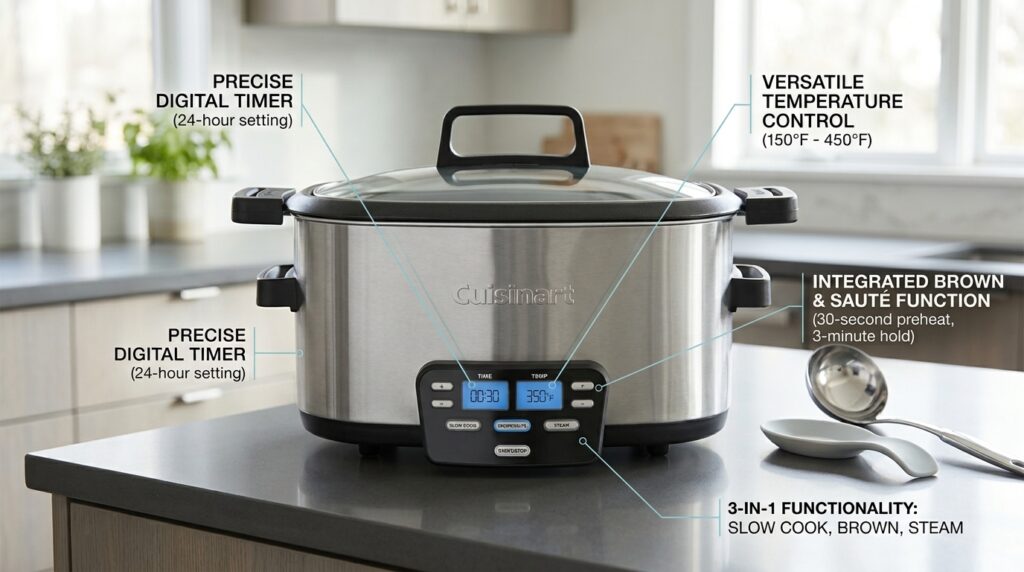
Three Programmable Cooking Functions The unit offers dedicated settings for Slow Cook, Brown/Sauté, and Steam, each with its own temperature range and time controls. Slow Cooking can run on high, low, simmer, or warm settings for as long as 24 hours, which allows for both quick weeknight meals and longer, low-and-slow preparations like pulled pork or stock.
Brown/Sauté Function This setting can reach temperatures up to 400°F, which is hot enough to sear meat, sauté vegetables, or reduce a sauce directly in the same pot that will later be used for slow cooking. This is one of the more practical aspects of the design, since it removes the need to dirty a separate skillet before starting a slow-cooked dish.
Steam Setting The Steam function can run for up to 90 minutes and works with an included steaming rack. Steaming is generally considered one of the gentler cooking methods, since it doesn’t require added fat and tends to preserve more of a food’s texture and nutrients compared to boiling or frying.
Automatic Keep Warm Mode Once a cooking cycle finishes, the appliance shifts automatically into a Keep Warm setting. This is a small but genuinely useful detail for anyone who’s ever finished cooking a large meal only to have people trickle in at different times — the food stays at a serving-safe temperature without additional attention.
Nonstick, Removable Cooking Pot The 6-quart pot lifts out for serving or cleaning and is dishwasher safe. A nonstick interior also means less oil is generally needed during browning, and cleanup tends to be less labor-intensive than with a stainless interior.
Stainless Steel Housing The exterior is finished in brushed stainless steel, which is a common choice for countertop appliances because it tends to blend in with other kitchen hardware and is relatively easy to wipe down.
Recipe Booklet The multi-cooker typically ships with a recipe booklet to help new owners get a sense of how the three functions can be combined, which can be a helpful starting point for anyone unfamiliar with combination cooking.
How It Can Be Used
One of the more appealing aspects of a 3-in-1 design is the flexibility it offers across different kinds of meals. A few common use cases include:
- Weeknight dinners that start with browning. Chili, stews, and braises often taste better when the meat or aromatics are browned first. With this appliance, that step happens in the same pot, so there’s no extra pan to wash before the slow cooking begins.
- Large-batch cooking. At 6 quarts, the pot has enough capacity for feeding a family or preparing food for a gathering, whether that’s a pot of soup, a roast with vegetables, or a big batch of pulled chicken for sandwiches.
- Steamed sides and appetizers. The steaming rack can be used for vegetables, dumplings, or shellfish, offering a lower-fat alternative to sautéing or frying when that’s the goal.
- Make-ahead meals. Because the Slow Cook setting can run for extended periods, it lends itself well to meals that are started in the morning and ready by evening, without requiring someone to be home to monitor the process.
- Sauces and reductions. The Brown/Sauté function’s higher heat range makes it possible to reduce liquids or build a sauce base before switching over to a slower cooking mode.
Because the three functions live in one pot, recipes that traditionally require moving food between different pieces of equipment — like braises, pot roasts, or bean dishes — can generally be done from start to finish without switching cookware.
Who It May Be Suitable For
This type of appliance tends to appeal to a fairly broad range of people, though it’s worth thinking about your own cooking habits before deciding if it’s a good fit.
- Households that cook in larger volumes. Families, meal-preppers, or anyone who regularly cooks for more than two or three people may appreciate the 6-quart capacity.
- People who already use a slow cooker but want more flexibility. If browning meat separately before slow cooking has always felt like an extra, unwanted step, a combination unit like this addresses that specific friction point.
- Cooks who value counter space efficiency. Consolidating three functions into one appliance can reduce the number of separate gadgets taking up cabinet or counter space.
- People interested in steaming as a cooking method. Not every slow cooker includes a steaming function, so this may be relevant for anyone specifically looking to add more steamed vegetables, seafood, or dumplings to their routine.
On the other hand, someone who only cooks for one or two people, has limited storage space, or already owns several single-purpose appliances that cover these same functions might not get as much added value from this particular design.
Important Things to Consider
No appliance is a perfect fit for every kitchen, so a few practical points are worth keeping in mind.
Countertop footprint. A 6-quart multi-cooker is a mid-to-large-sized appliance. It’s worth measuring available counter or storage space beforehand, particularly in smaller kitchens.
Not a pressure cooker. It’s worth noting that this model does not include a pressure-cooking function. Some multi-cookers on the market do combine pressure cooking with slow cooking and sautéing, so anyone specifically looking for that feature should confirm which functions matter most to them before choosing between appliance types.
Learning curve with combination functions. While the three modes are designed to work together, getting comfortable with browning times, liquid ratios for slow cooking, and steaming durations can take a bit of trial and error, especially for anyone new to combination cooking.
Cleaning habits matter. Although the pot is dishwasher safe, the exterior housing and lid should generally be wiped down by hand to help maintain the appliance’s finish and function over time, as is typical with most countertop electric cookers.
Storage of accessories. The steaming rack and lid need a dedicated storage spot, which is a small but sometimes overlooked consideration when comparing appliance sizes.
Warranty and support. As with most kitchen appliances, checking the manufacturer’s warranty terms and registering the product, if applicable, can be useful for long-term peace of mind.
Multi-Cookers vs. Other Countertop Cooking Categories
It can help to think about where a 3-in-1 slow cooker/sauté/steamer unit fits relative to other common categories of countertop appliances, without getting into specific brand comparisons.
Traditional single-function slow cookers are generally simpler, often less expensive, and easier to operate for people who mainly want a “set it and forget it” cooking style. They typically lack a sauté or steam function, meaning browning still needs to happen on a separate stovetop pan.
Pressure cooker/multi-cooker hybrids (sometimes marketed as electric pressure cookers) usually add a pressure-cooking mode on top of slow cooking and sautéing, which can significantly cut down cooking time for foods like beans, tough cuts of meat, or grains. These units tend to have a steeper learning curve due to pressure-release procedures and safety mechanisms.
Standalone steamers are typically compact and dedicated purely to steaming, which can be a good option for someone who only wants that one function and doesn’t need slow cooking or sautéing capability at all.
Combination units like the MSC-600 sit in between these categories — offering more versatility than a basic slow cooker without the pressure-cooking element found in some hybrid multi-cookers. This makes them a reasonable middle-ground option for people who want browning and steaming built in, but don’t necessarily need or want pressure cooking.
Each category has trade-offs in terms of cooking speed, complexity, and the number of functions bundled into a single appliance, so the right choice really depends on someone’s typical cooking habits and how much counter or storage space they’re working with.
Frequently Asked Questions
Does this multi-cooker have a pressure-cooking setting? No. This model includes Slow Cook, Brown/Sauté, and Steam functions, but it does not include a pressure-cooking mode. Anyone specifically looking for pressure cooking would need to look at a different category of multi-cooker.
Can the pot go in the dishwasher? The nonstick cooking pot is generally designed to be dishwasher safe, though the base unit itself (the part with the electrical components) should not be submerged or placed in a dishwasher.
How long can the slow cook function run? The Slow Cook setting is designed to run for up to 24 hours, with high, low, simmer, and warm options available depending on the recipe.
What temperature does the sauté function reach? The Brown/Sauté setting can reach up to 400°F, which is generally hot enough for searing meat or sautéing vegetables before switching to a different cooking mode.
Does it come with a steaming rack? Yes, a steaming rack is typically included for use with the Steam function.
Is it suitable for cooking large meals? With a 6-quart capacity, the unit is generally sized for family-style meals or larger batches, though exact capacity needs will vary depending on the specific recipe and how full the manufacturer recommends filling the pot for each function.
Does the appliance turn off automatically after cooking? It shifts into a Keep Warm mode once the programmed cooking cycle ends, rather than shutting off completely, which helps keep food at a safe serving temperature until it’s ready to be served.
Bringing It All Together
The Cuisinart 3-in-1 Cook Central 6-Quart Multi-Cooker is built around a fairly simple premise: reduce the number of pots and appliances needed to go from raw ingredients to a finished, slow-cooked meal. By combining browning, steaming, and slow cooking into one nonstick pot, it addresses a common frustration with traditional slow cookers — the need to dirty a separate pan before the slow cooking even begins.
Whether this particular appliance makes sense for a given kitchen really comes down to individual cooking habits, available counter space, and whether pressure cooking is a feature someone specifically wants. For households that regularly prepare browned-and-slow-cooked dishes, or that would like a steaming option built into their existing slow cooker routine, a combination unit like this one is worth learning more about.